
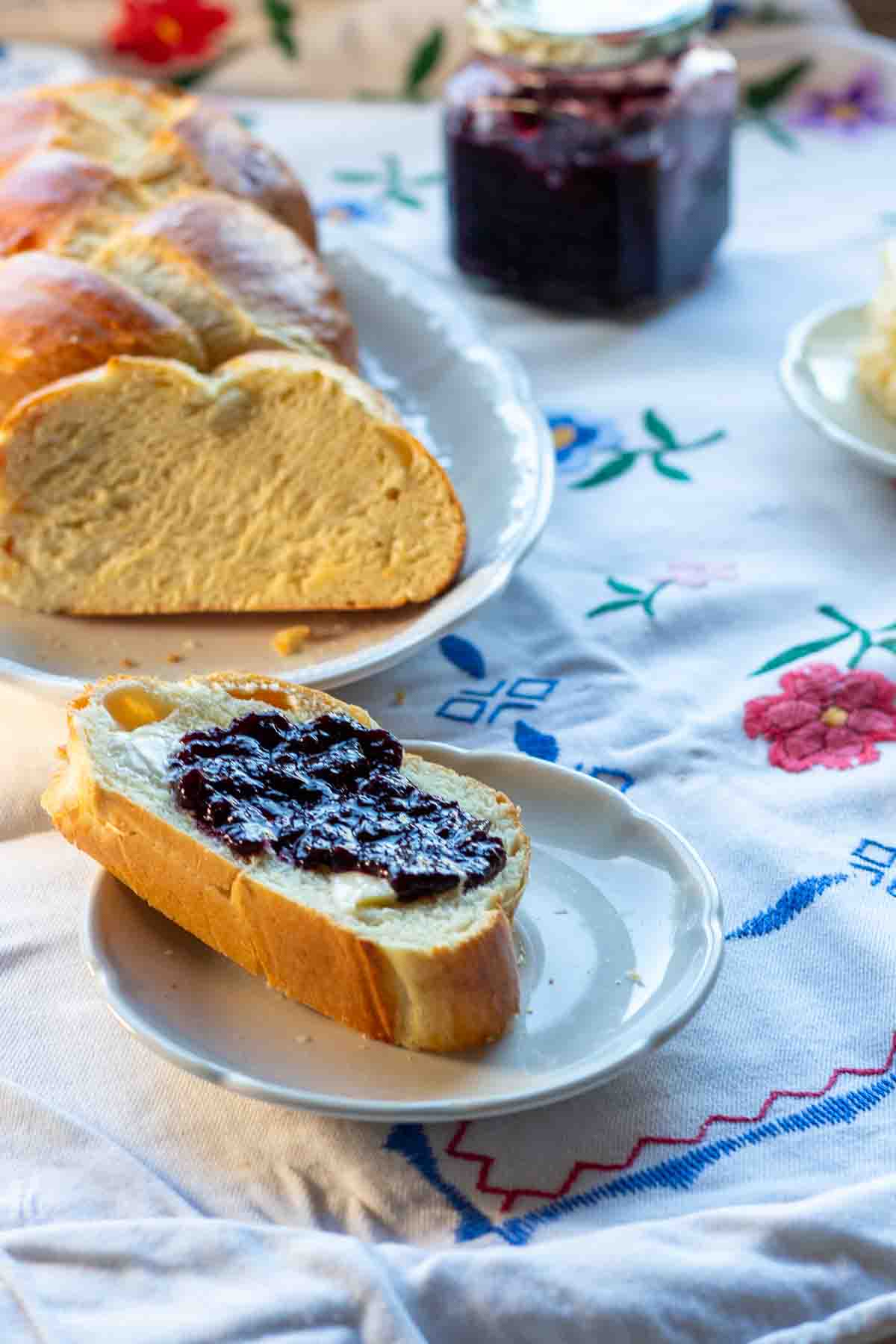
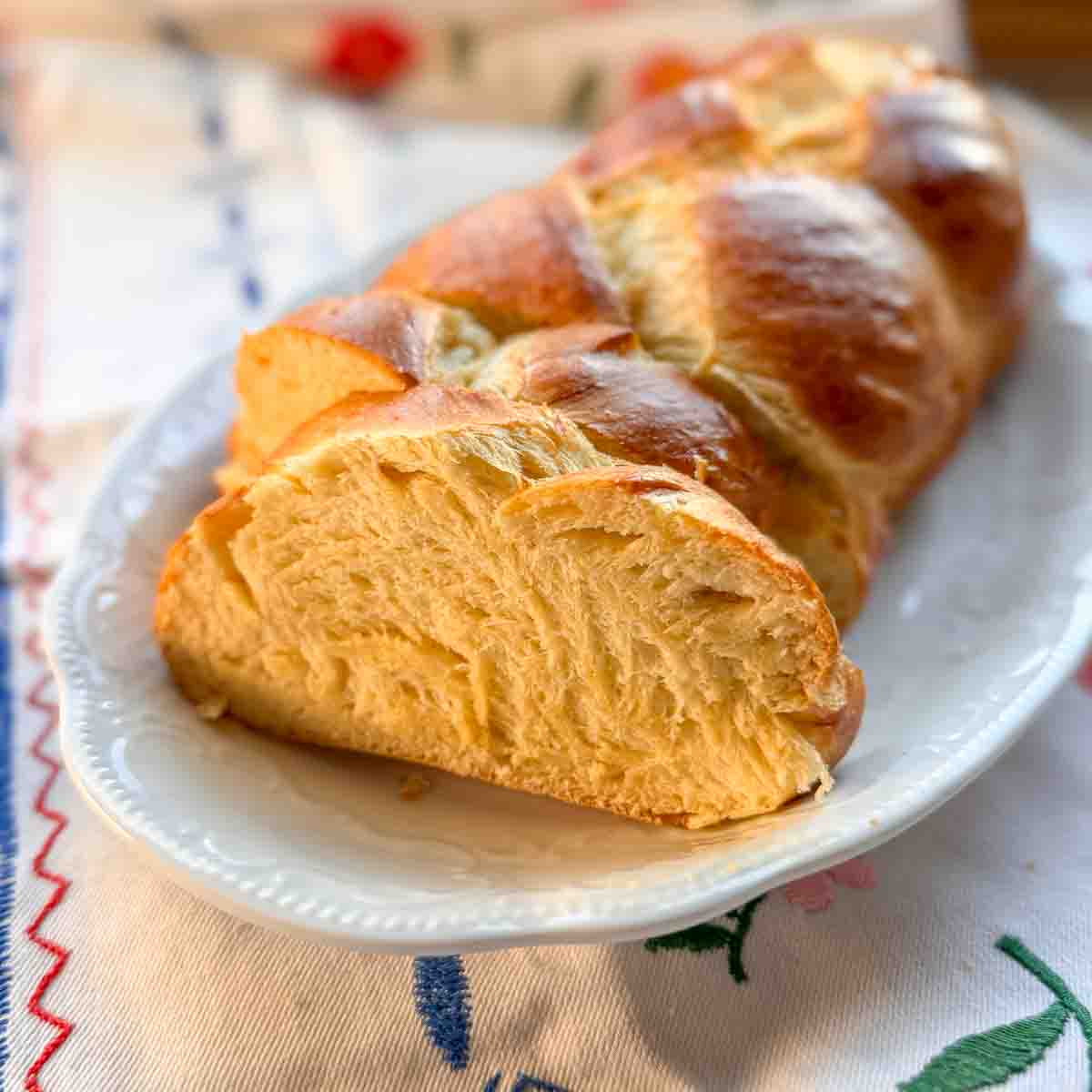
Here’s a wonderful recipe for a soft and fluffy Sweet Braided Yeast Bread, known in Austria as Striezel.
Traditionally, the Striezel is braided with four or six strands, but a classic three-strand braid works beautifully too.
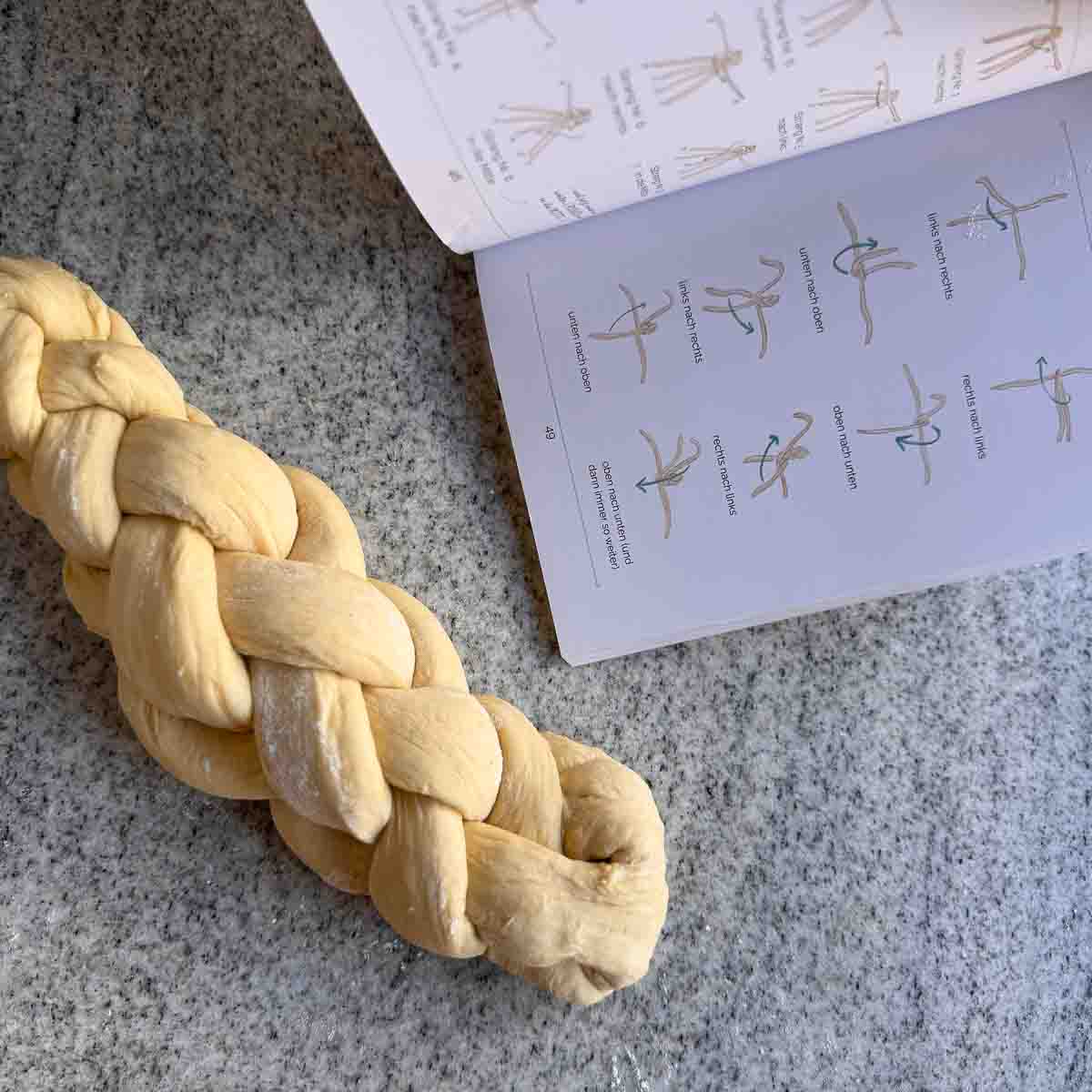
You’ll find a link to a video and some Instructions to download and print further down in the post that show how to braid a six-strand as well as a four-strand Striezel step by step.
This delicious bread is traditionally made for All Saints’ Day (Allerheiligen, November 1st) and also very popular at Easter.
Jump to:
Whether as a snack with coffee, a sweet breakfast, or for brunch - with or without raisins - your homemade Striezel will always be a hit! 😉

Download PDF Instructions on how to braid a Striezel
The Striezel can be braided into a 6-strand braid, a 4-strand braid, or, of course, simply a 3-strand braid.
Braiding a 6-strand Striezel: Click here for a PDF download with instructions on how to braid a 6-strand braid.
Braiding a Striezel with 4 strands: Click here for a PDF download with instructions on how to braid a 4-strand braid.
Of course, you can also divide the dough into several small portions and shape them into lots of little Striezel or similar pastries. (The baking time will be shorter in that case.)
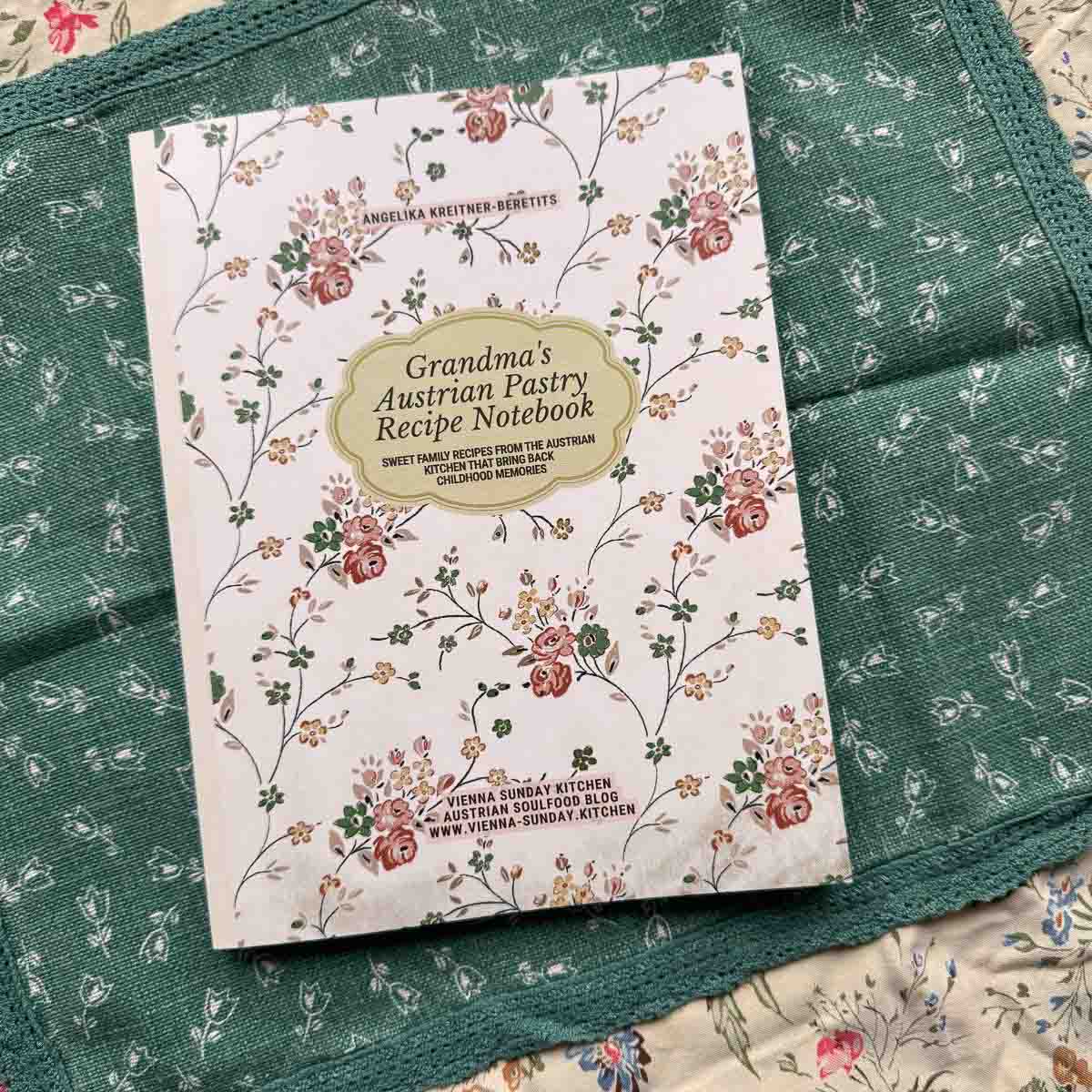
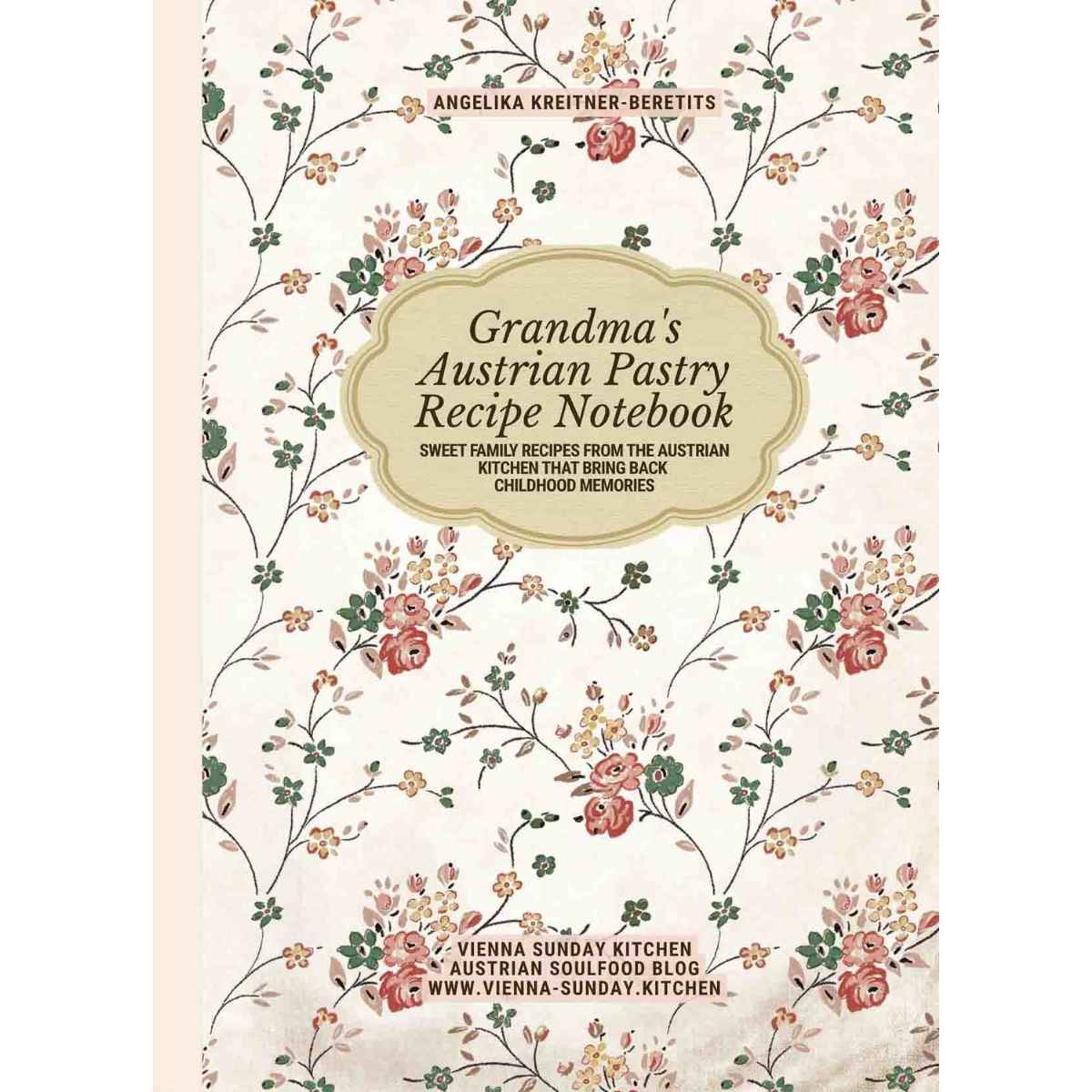
By the way, the Striezel recipe - including braiding instructions - is also available in my cookbook, “Granny's Austrian Pastry Recipe Notebook”! (You can take a look inside the book and find where to buy it worldwide here.)
Video
Here is the video instruction on how to braid a 6-strand yeast bread (it's in German only - sorry for that - but hope it helps anyways...):
Here is the (German) video instruction on how to braid a 4-strand yeast bread:
Ingredients
For the dough
- 21 g fresh yeast (¾ oz) or 7 g/¼ oz/2¼ teaspoon instant dry yeast
- 250 ml milk (1 cup)
- 70 g sugar (⅓ cup)
- 500 g bread flour (4 cups) or all-purpose flour
- 1 pkg vanilla sugar (2 tsp/8 g) or ⅓ teaspoon vanilla extract + 2 teaspoon sugar
- pinch of salt
- 1 egg, medium or large
- 70 g butter (5 tbsp), at room temperature, unsalted
- handful of raisins (optional)
- 1 tablespoon dark rum (optional)
- finely grated zest of 1 lemon (optional)
Additionally
- flour for dusting and shaping
- 1 small egg + 2 tablespoon of milk for brushing
- extra coarse sugar or sliced almonds for sprinkling (optional)
Instructions
Preparations in advance:
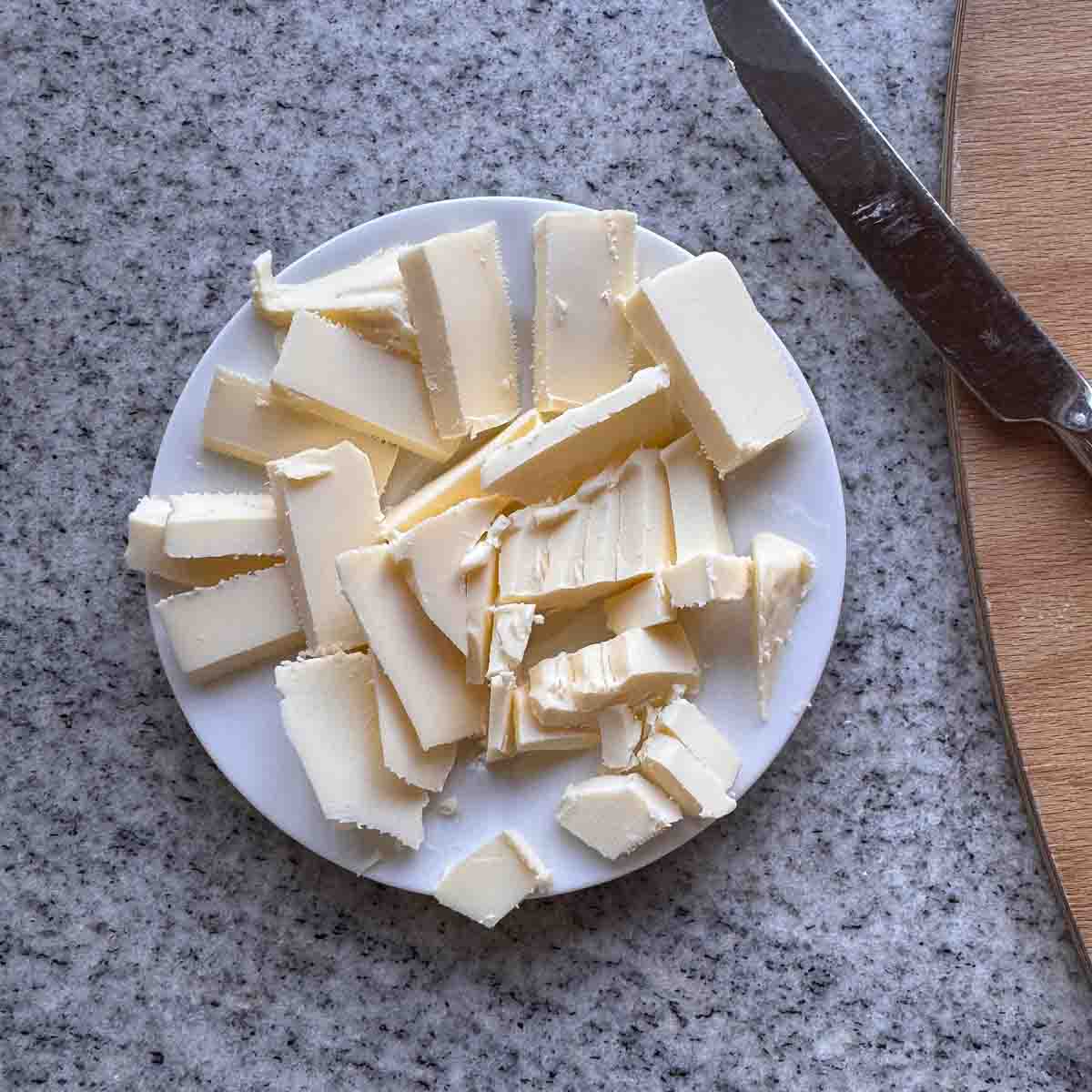
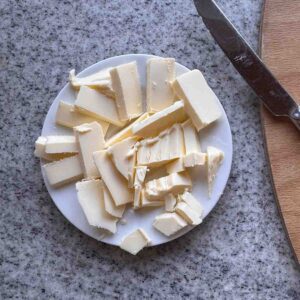
It's best to take the butter out of the refrigerator 1–2 hours before you start preparing it and cut it into small pieces. I forget to do that every time, and then I get annoyed...
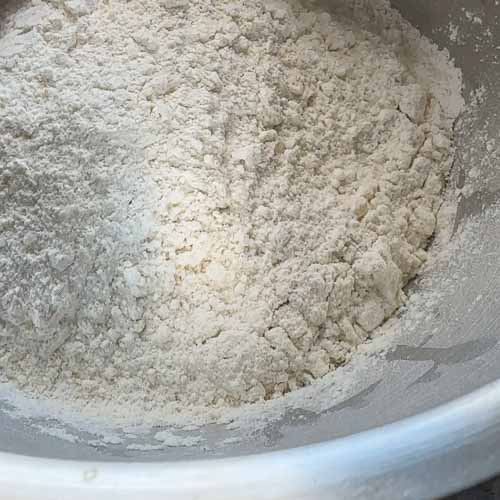
Weigh out 500 g of wheat flour and 70 g of granulated sugar, and set them aside in separate bowls.
Optional:
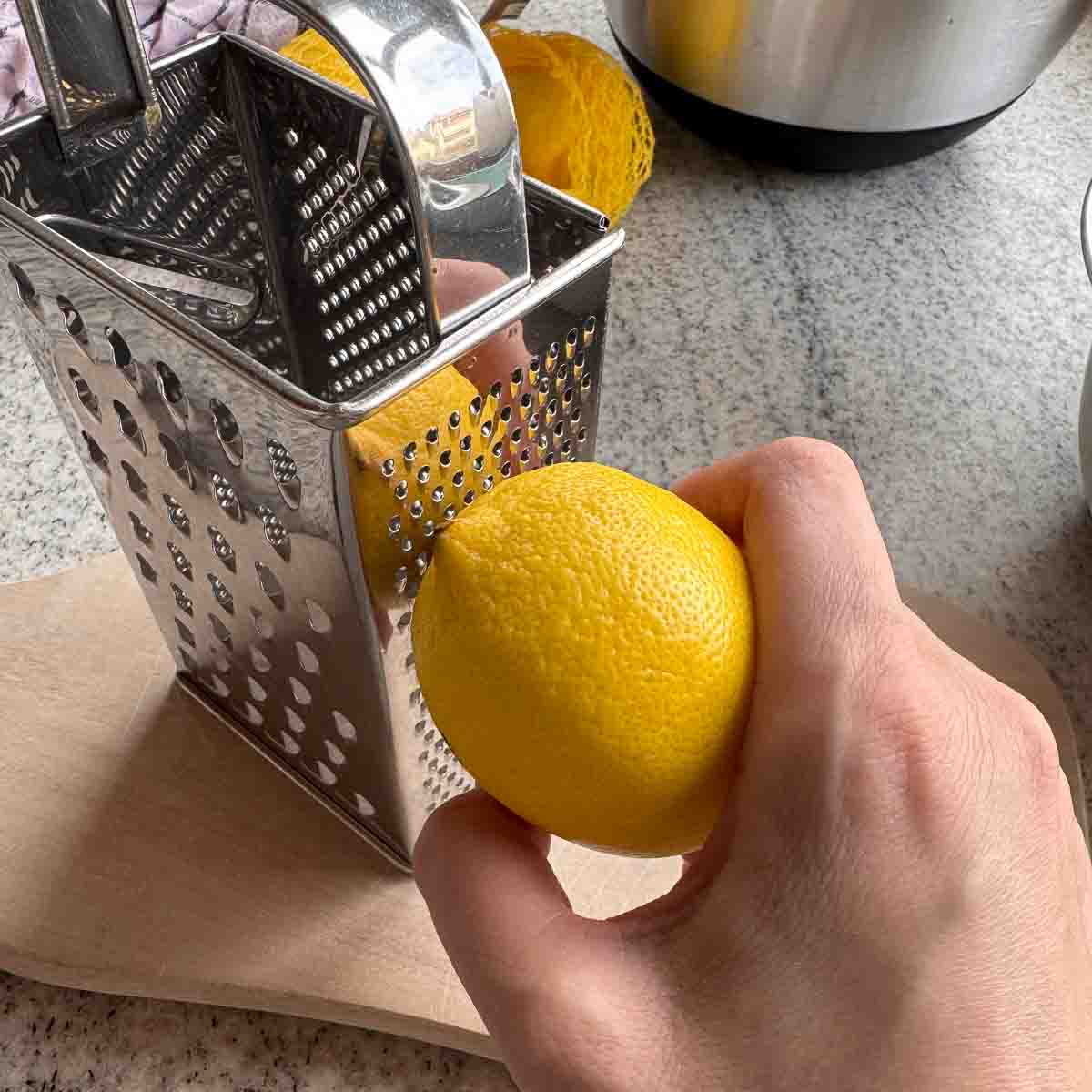
Finely grate the zest from 1 organic lemon.
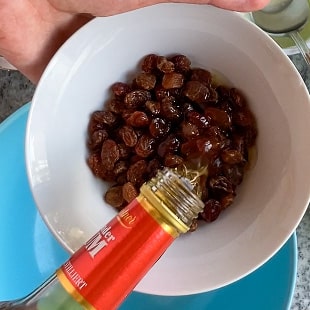
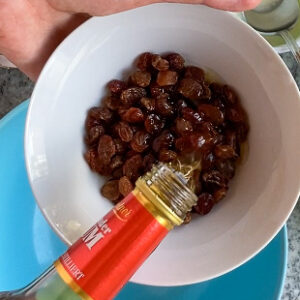
Let 1 handful of raisins soak in dark rum for about 30 minutes; in that case, omit the 1–2 tablespoons of dark rum and squeeze out the excess liquid well before using.
Knead the dough:
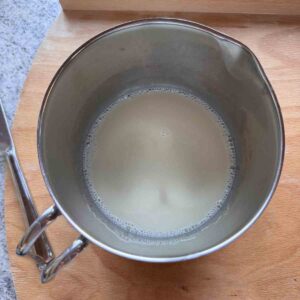
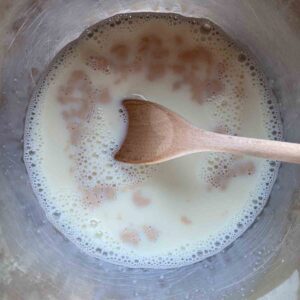
Gently warm the 250 ml of milk. It should be lukewarm - under no circumstances should it be hot, because otherwise the yeast will die and the dough won't rise properly.
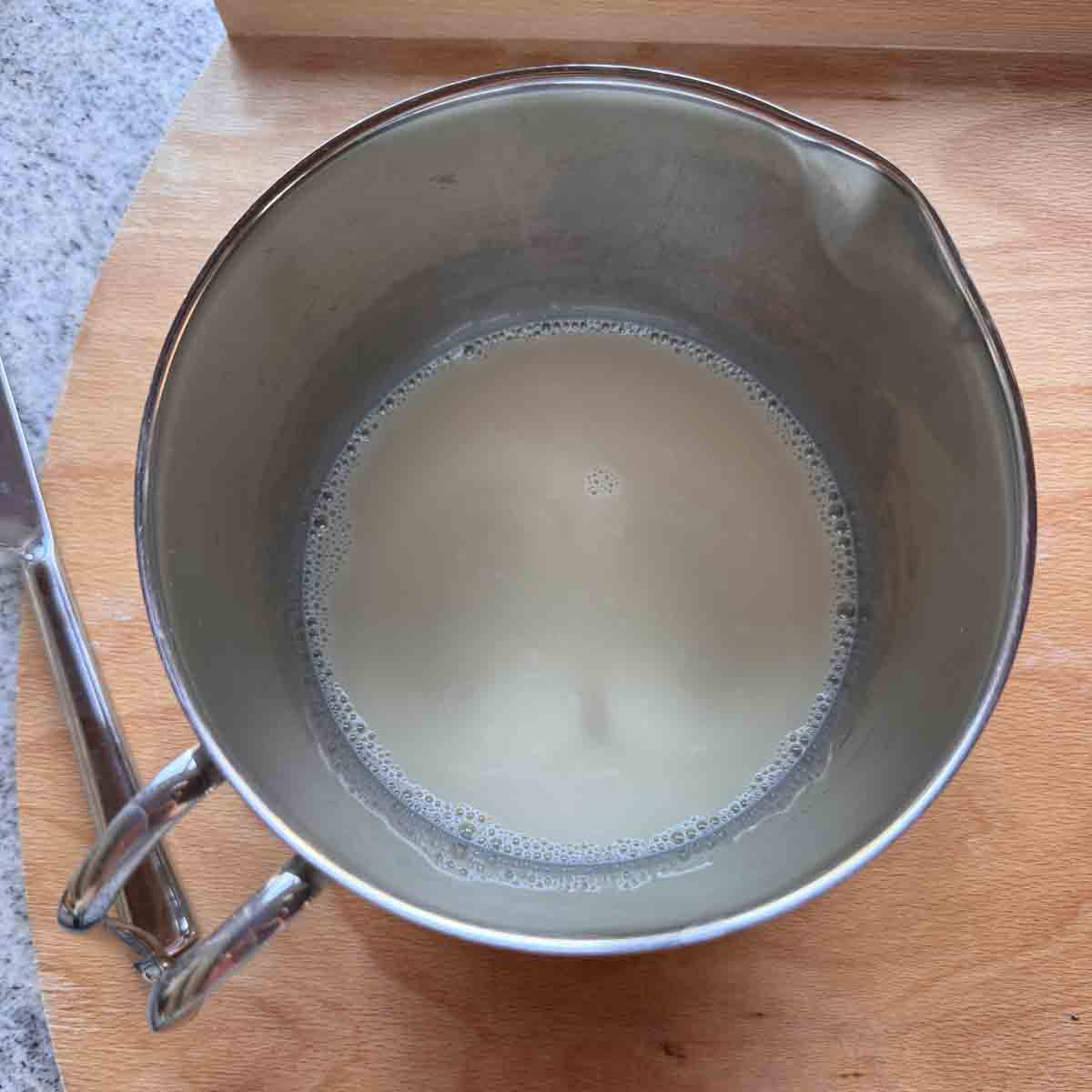
If you're using fresh yeast: Crumble half a cube of yeast (21 g) and dissolve it in the milk along with 1 tablespoon of the 70 g of sugar in a large bowl.
Why not just use all 70 g of sugar at once? Mixing too much sugar directly with the yeast can inhibit the yeast's activity. As a result, the dough won't rise as well.
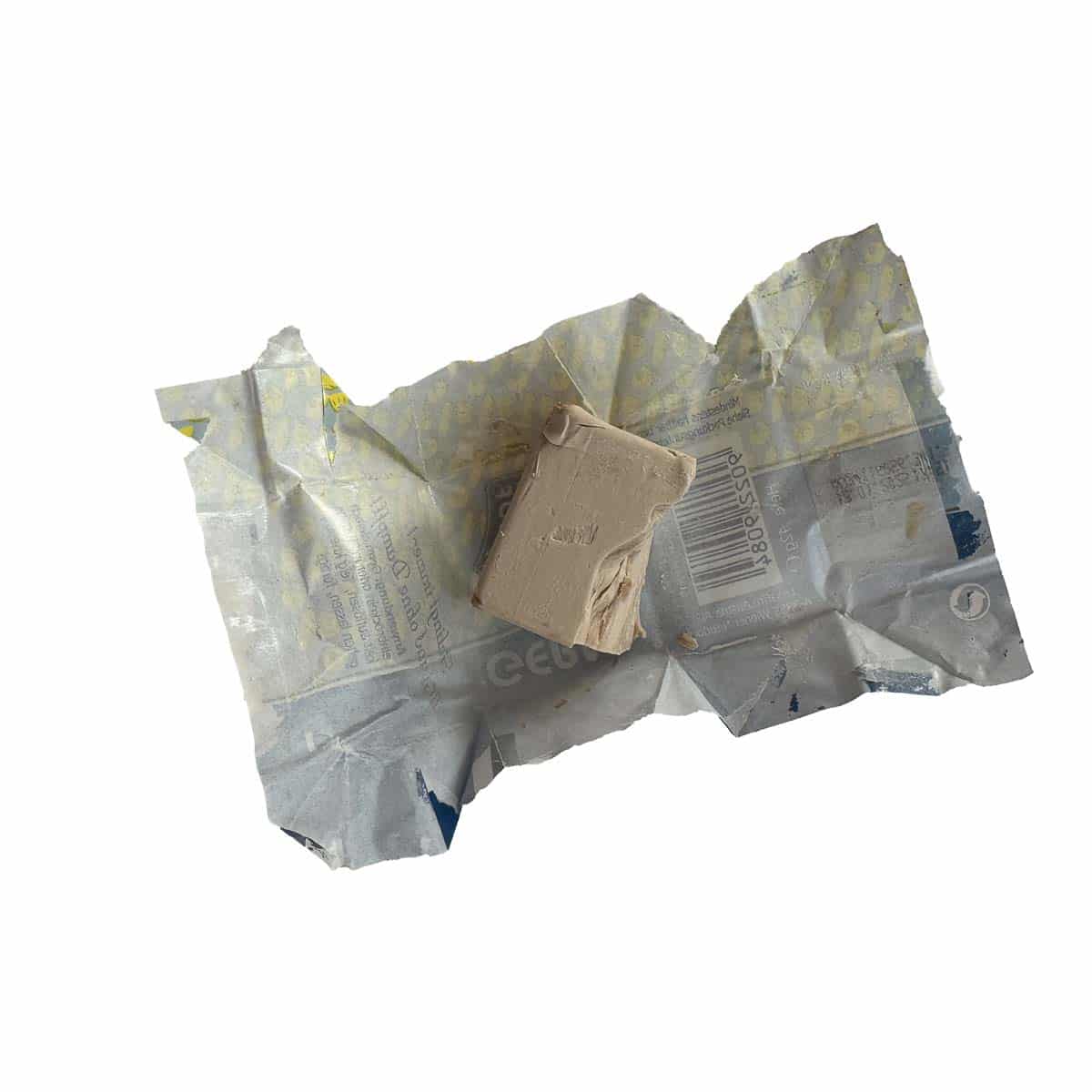
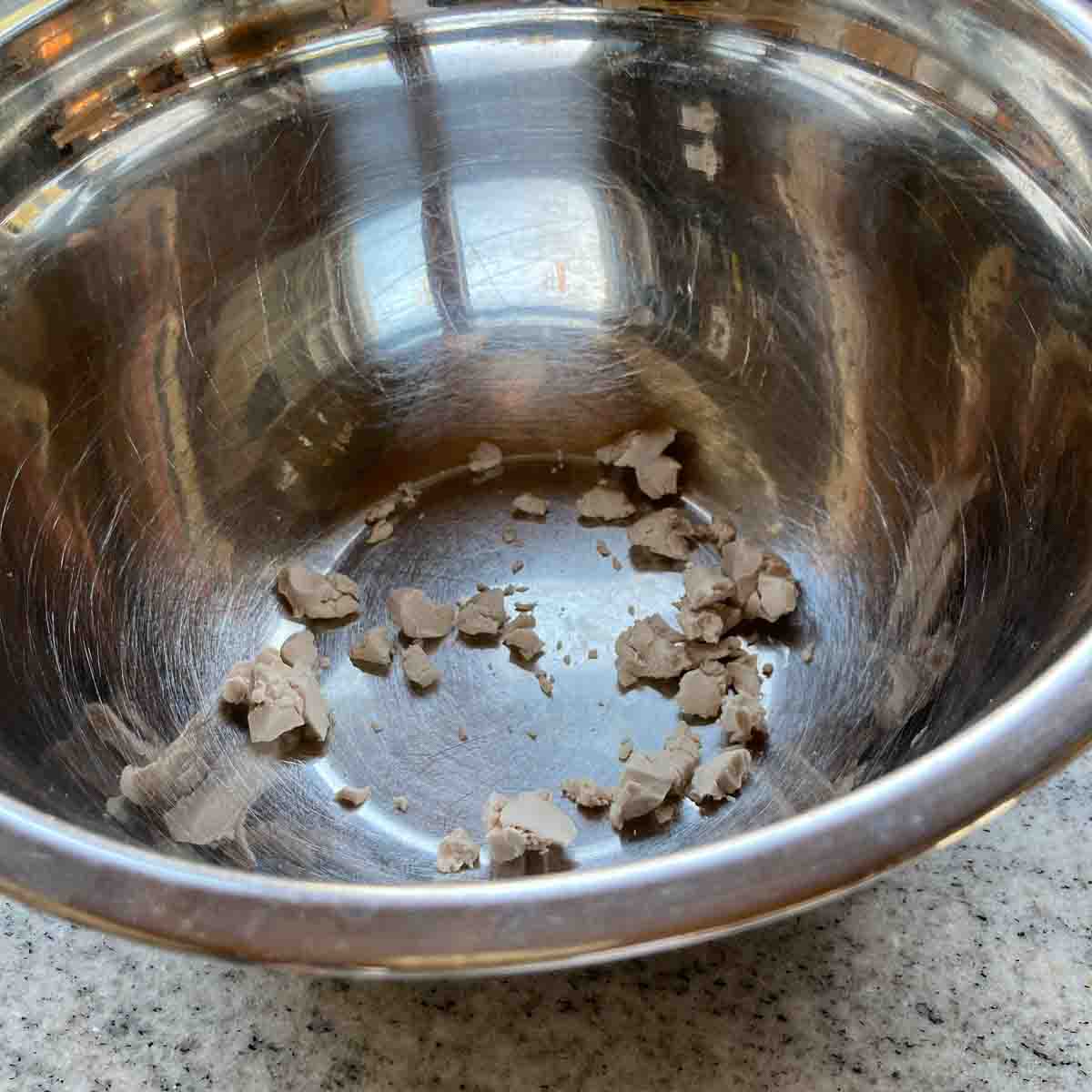
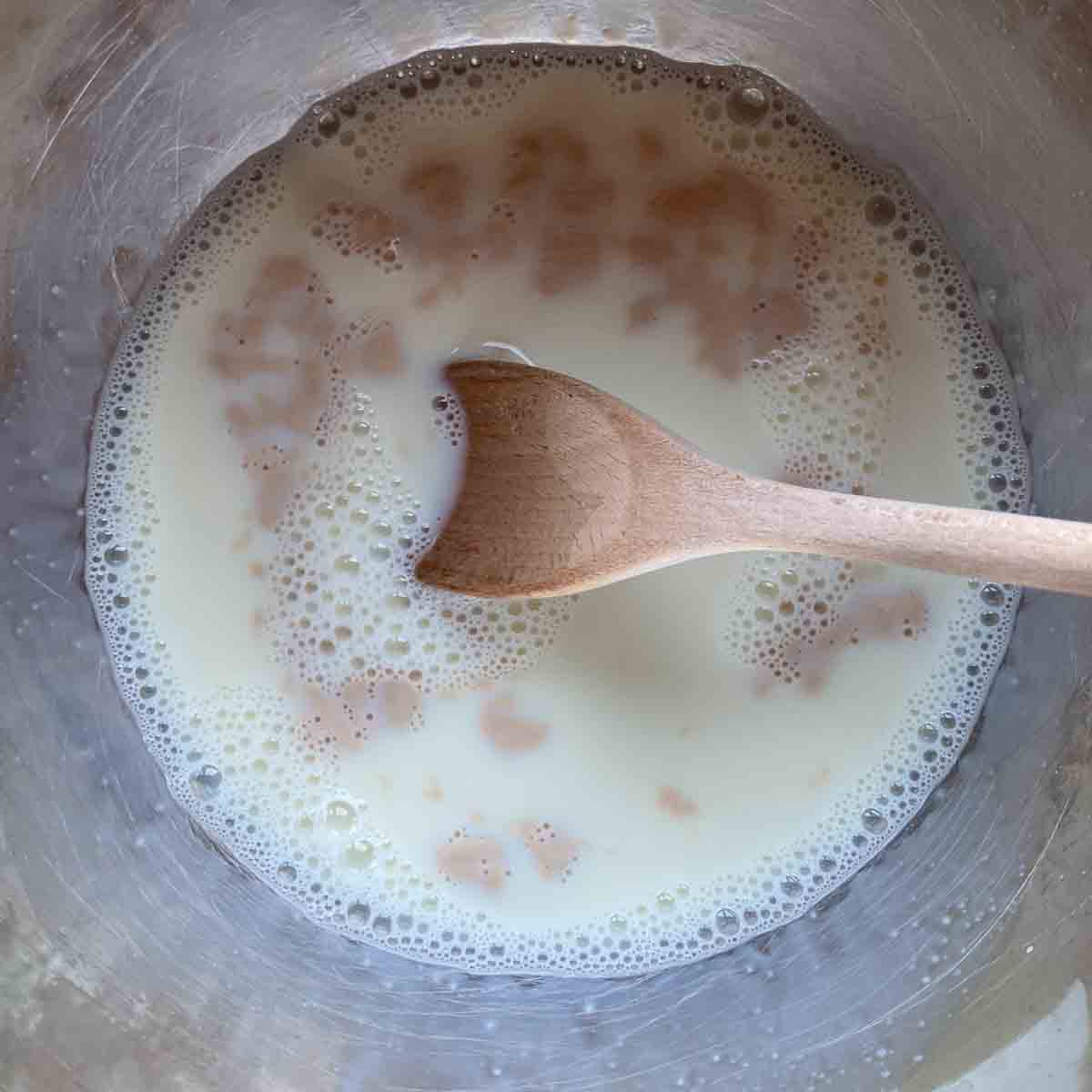
If you're using dry yeast, you can also dissolve it in the milk right away, or mix it directly into the flour.
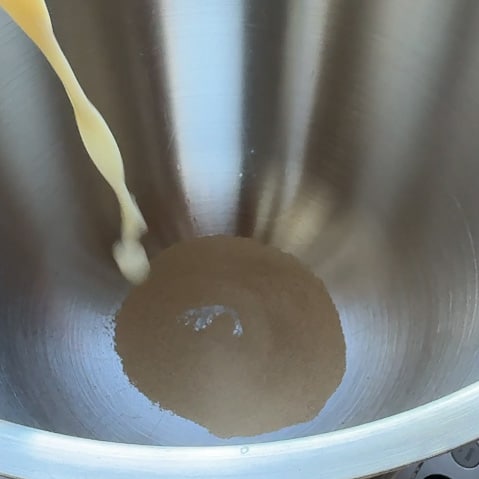
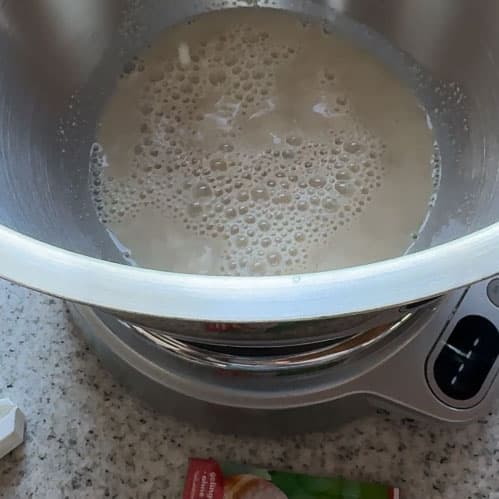
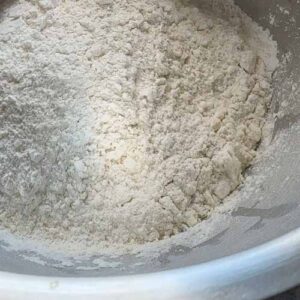
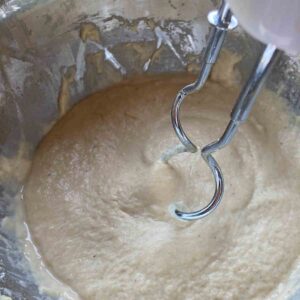
500 g wheat flour, the remainder of the 70 g granulated sugar, 1 package of vanilla sugar, 1 pinch of salt, 1 egg—stir in gradually while mixing well.
Finally, mix in the 70 g of room-temperature butter a little at a time. Note: At first, it may seem as though the dough isn’t absorbing the butter well, but after a while, the dough will become nice and smooth.
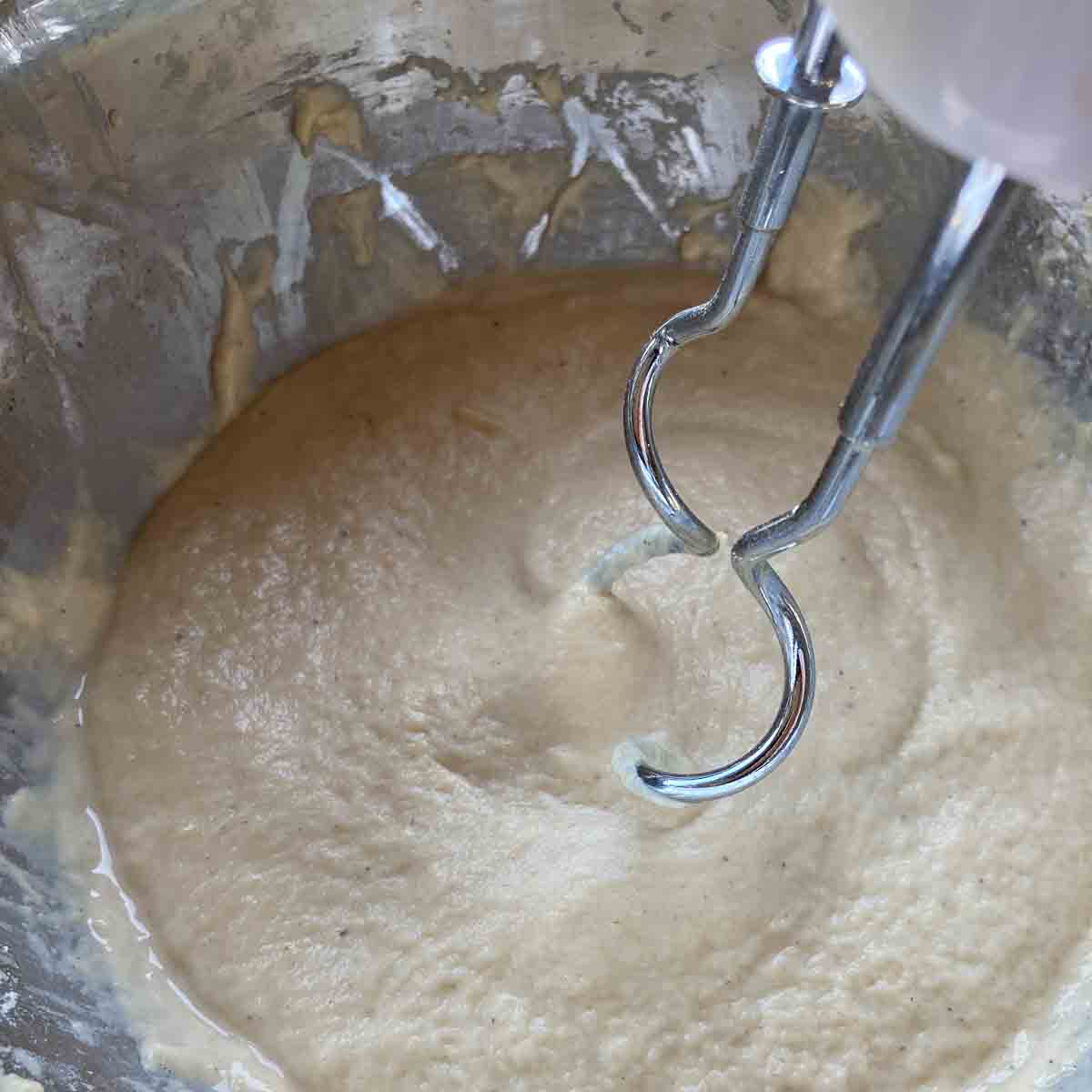
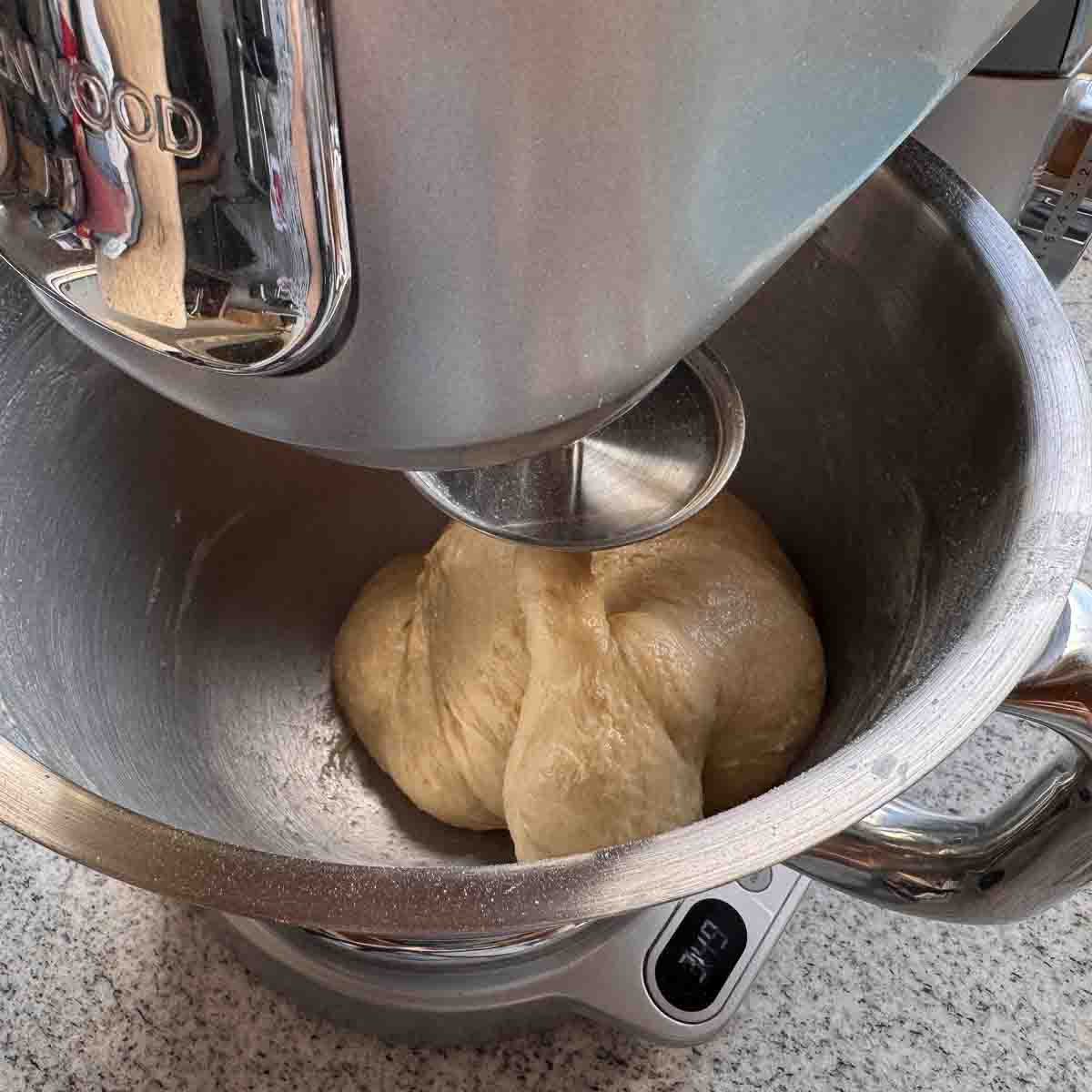
Optionally, knead in a handful of raisins, 1–2 tablespoons of rum, and the grated lemon zest.
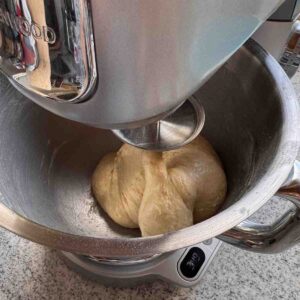
Tips: You can knead the yeast dough using a stand mixer, the dough hook attachment on your hand mixer, or by hand. It’s important to knead the dough thoroughly for about 5–10 minutes, until it pulls away from the bowl and has a smooth surface.
To check if the yeast dough is ready, you can also do the so called "window test": If you can stretch a piece of the dough until you can see through it without it tearing, then it’s ready..
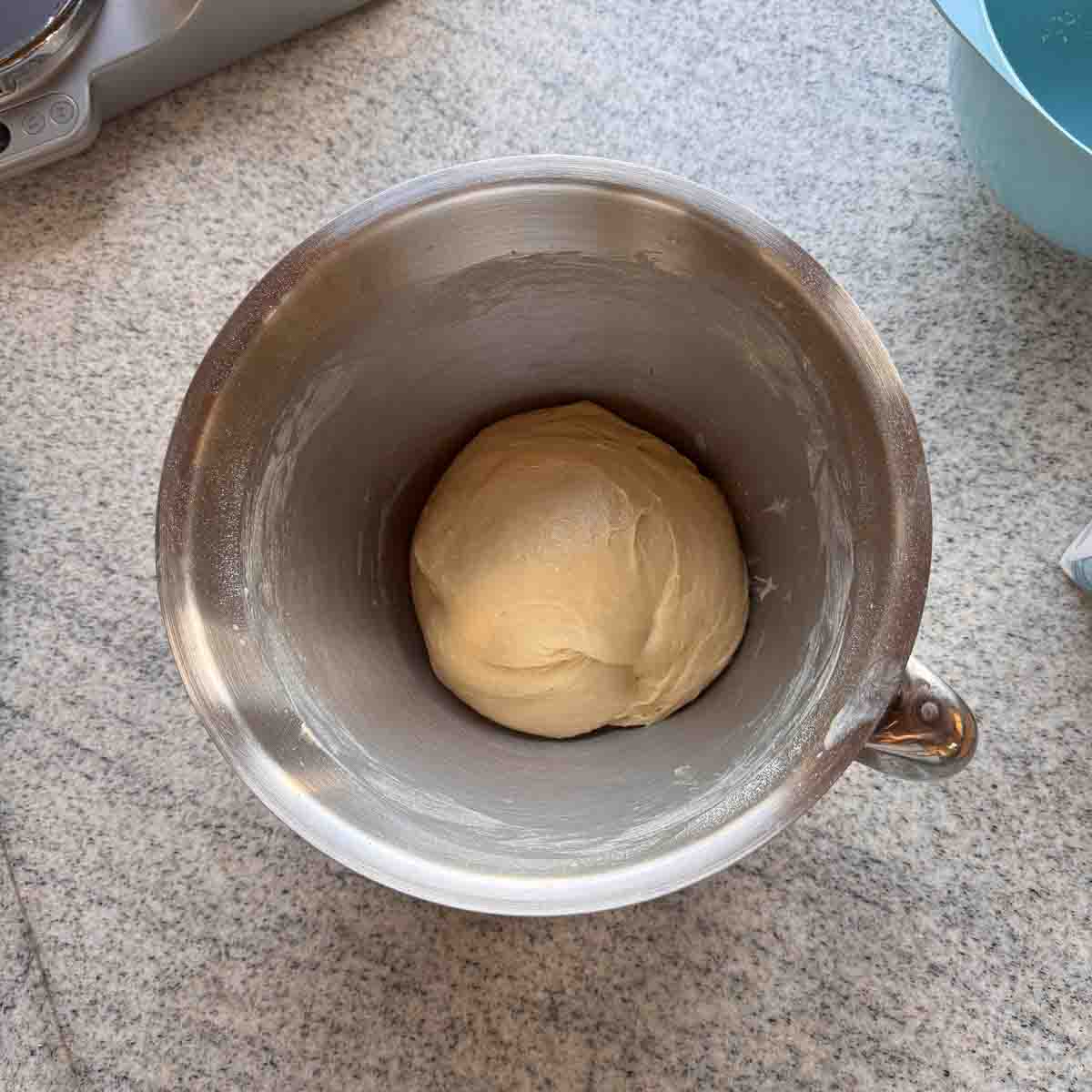
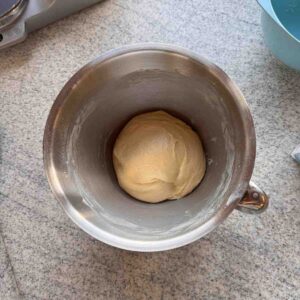
Shape the dough into a ball with a smooth surface.
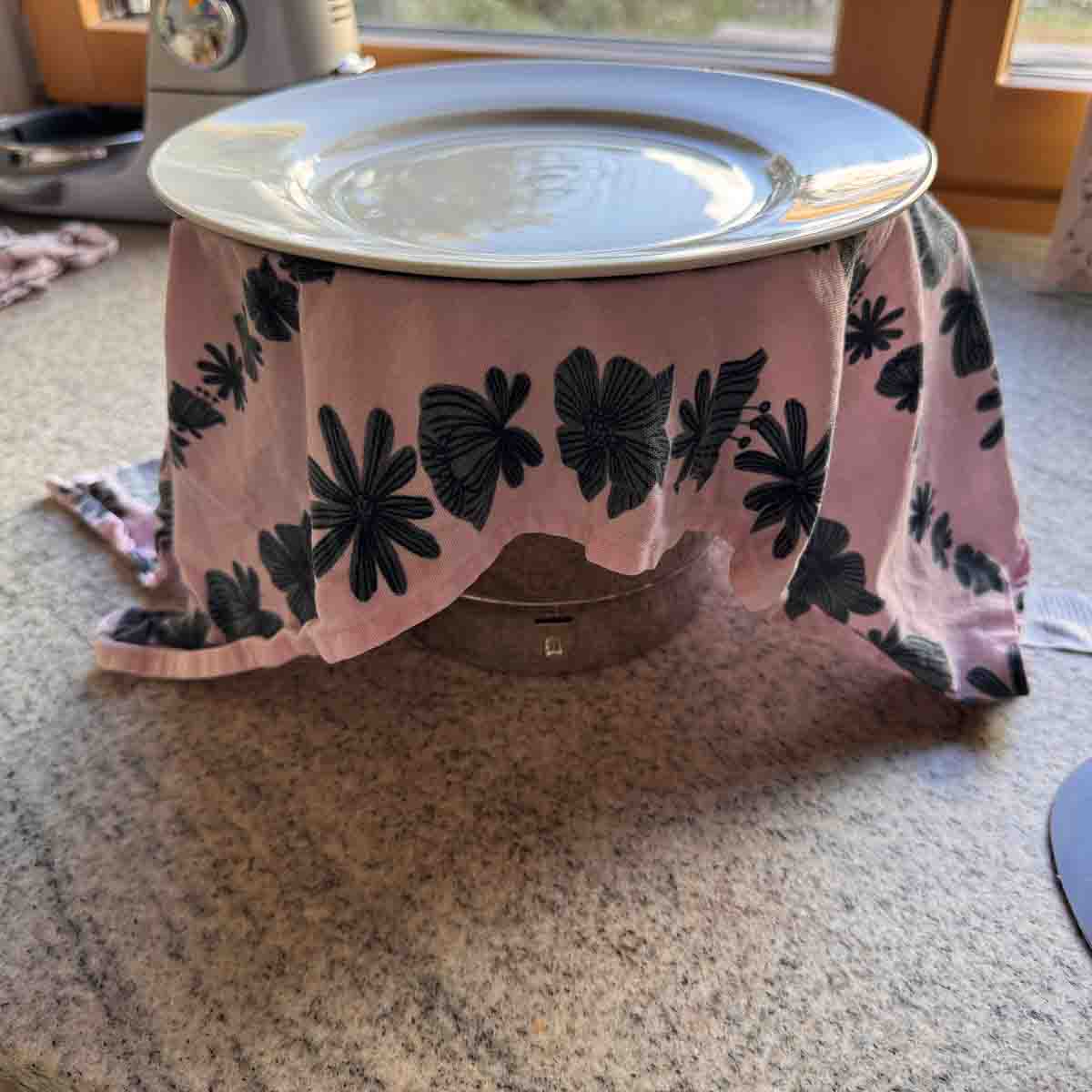
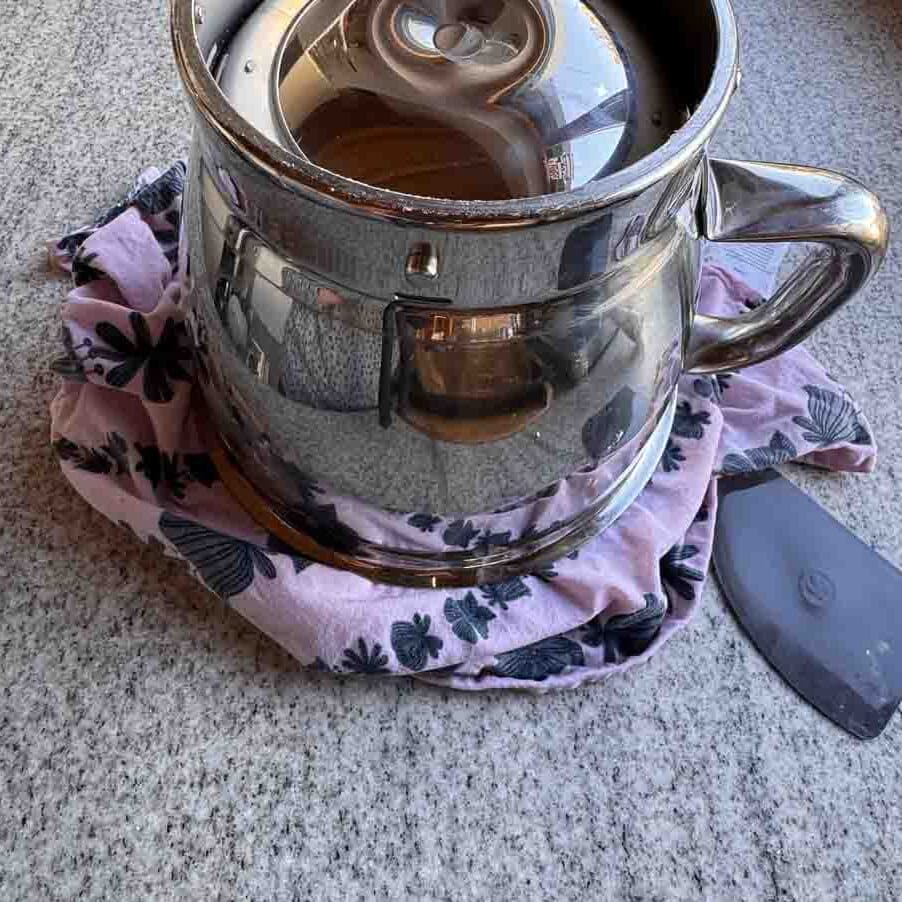
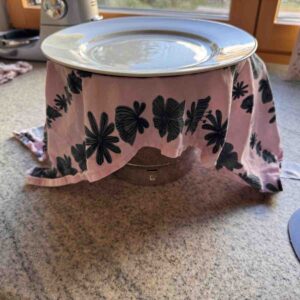
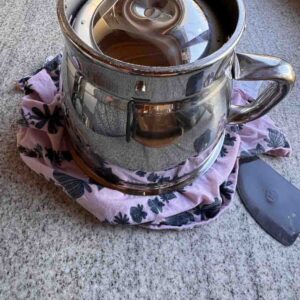
Cover the bowl with a damp kitchen towel, a plate, plastic wrap, or something similar.
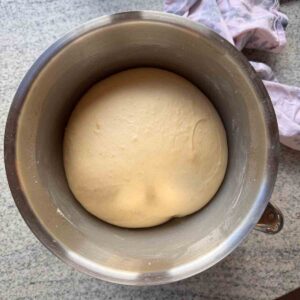
Let it rest in a warm, draft-free place for about 30 to 60 minutes, until the dough has doubled in volume. Ideally, let the yeast dough rise next to a heater or in the oven at about 30°C. It shouldn’t be placed next to an open window, as this would prolong the resting time.
You can also knead the yeast dough the evening before baking and then let it rest overnight in the refrigerator. The next day, let it rise for another 30–60 minutes at room temperature before using it.
Shaping and Baking:
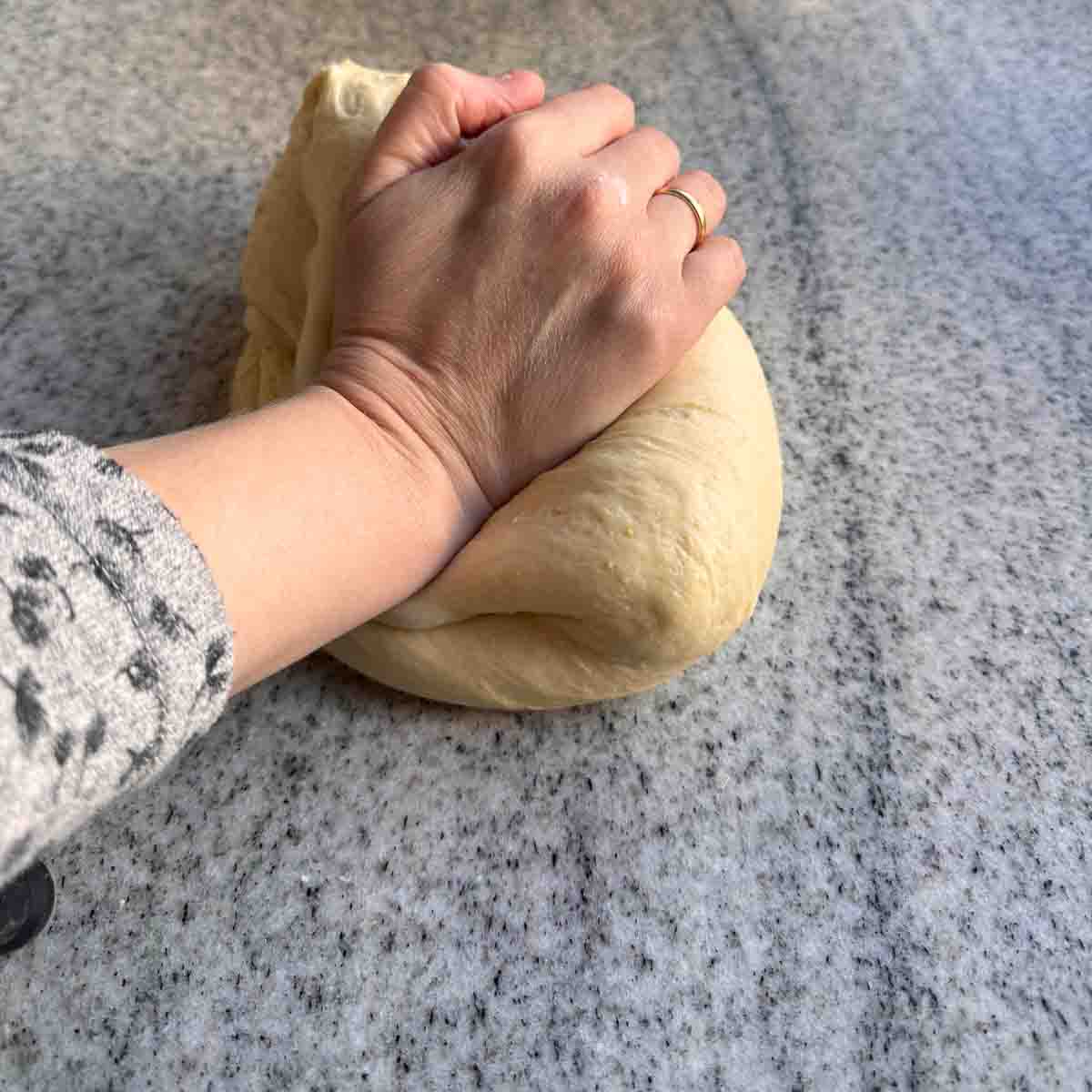
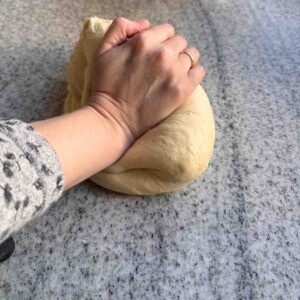
Knead the dough thoroughly a second time with your hands. If the dough is very sticky, dust your hands and the work surface very lightly with flour—but use as little as possible so the dough doesn't get too dry!
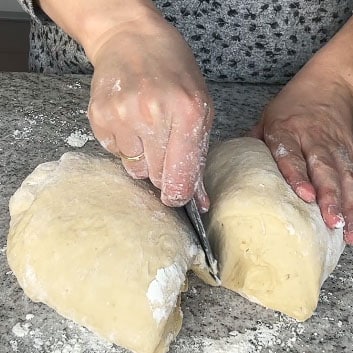
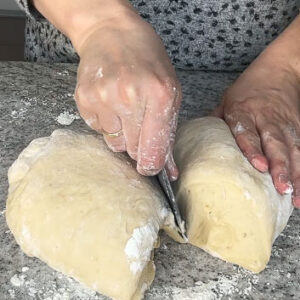
Use a dough scraper to cut it into 3–6 equal-sized pieces. (Depending on how many strands you want to use to braid the Striezel.)
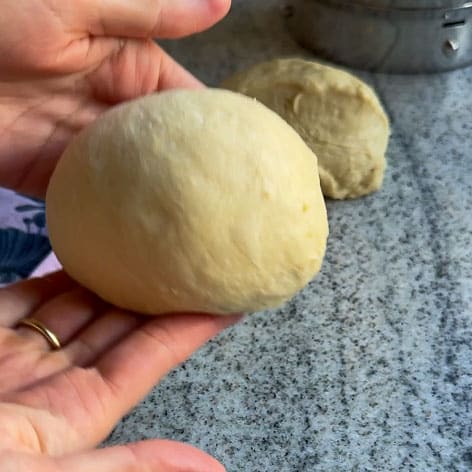
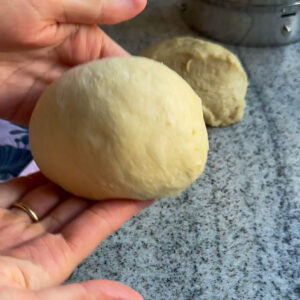
Shape each of the dough pieces into a ball and smooth the surface until round. This helps create a smoother surface and ensures a more even result.
Cover the rounded dough pieces and let them rest for about 10 more minutes. This allows the dough to “relax,” making it easier to roll out the dough strands.
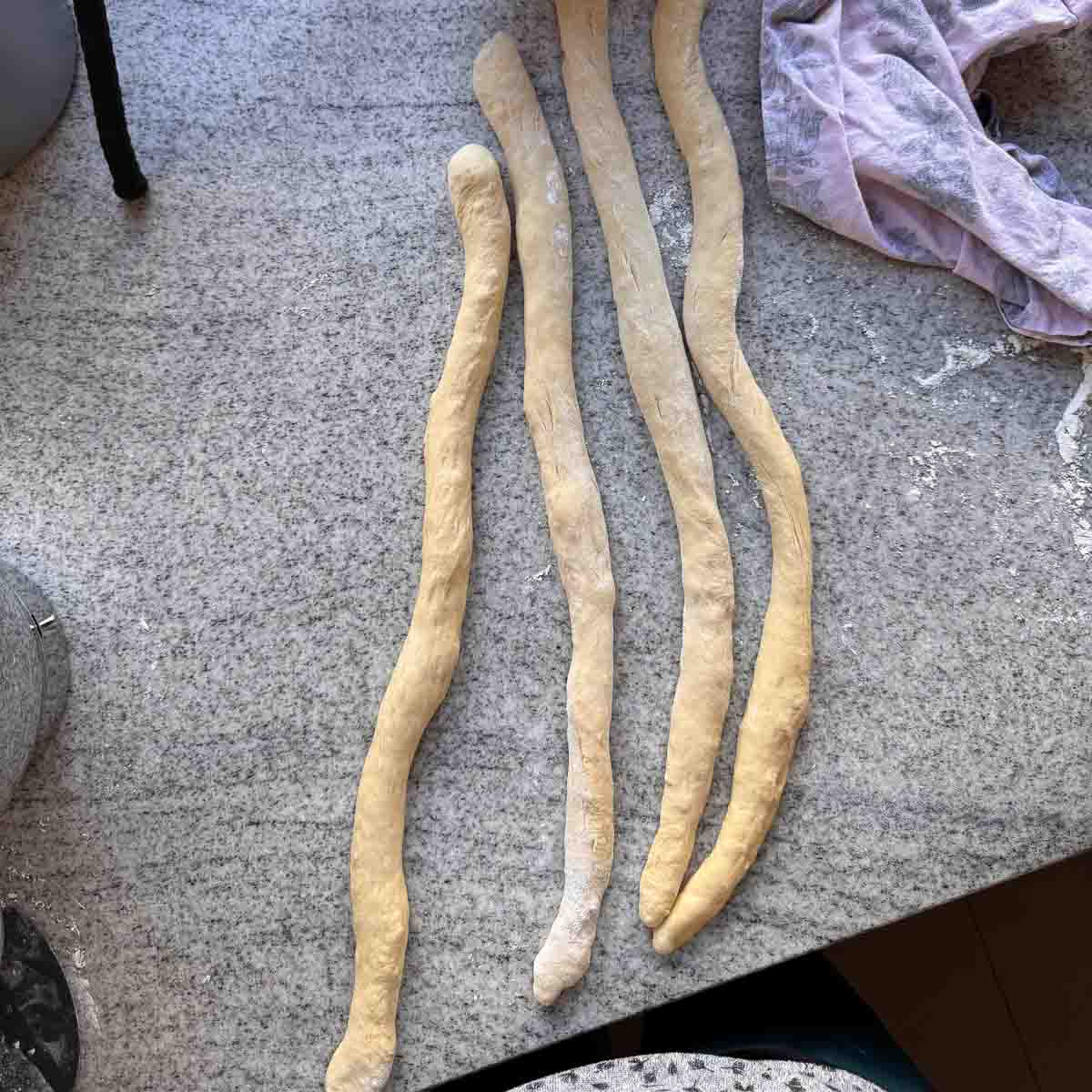
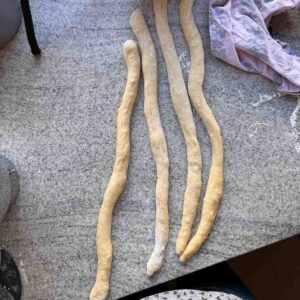
Roll out the balls into strands about 30–40 cm long. A good way to do this is to flatten the ball, gently tuck in the top and bottom edges, and then apply even pressure with your hands as you roll out the strand.
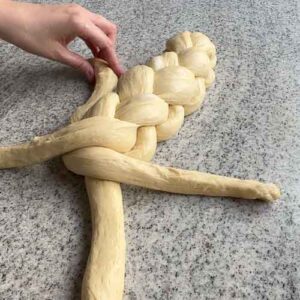
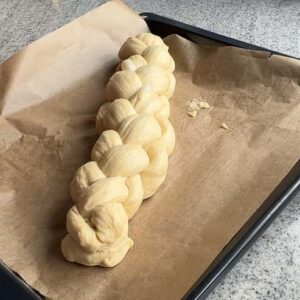
Now braid it into a plait.
Click here for instructions on how to make a 6-strand bread. (PDF Download, 1 page)
Click here for instructions on how to make a 4-strand bread. (PDF Download, 1 page)
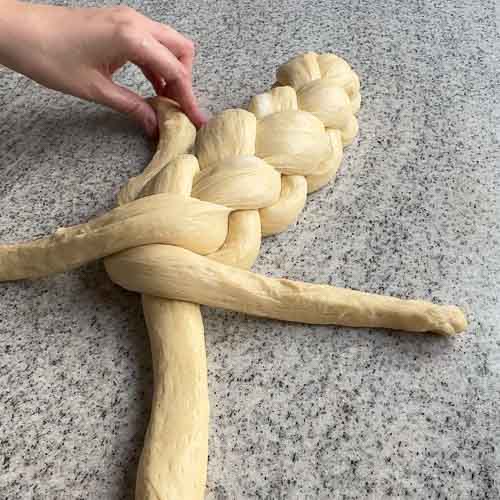
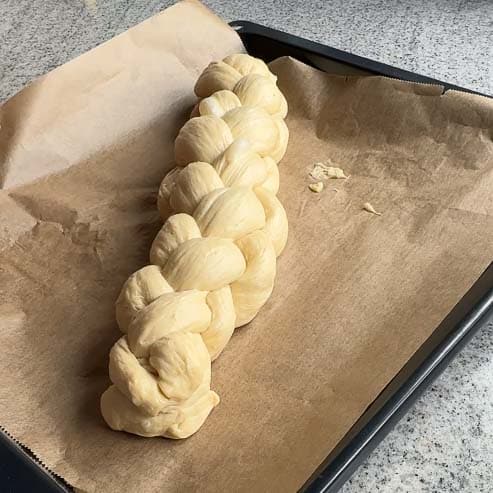
Line a baking sheet with parchment paper / baking mat or grease it with butter.
Carefully transfer the Striezel to the baking sheet.
Let it rest, covered, for another 30 minutes.
In the meantime, preheat the oven to 180°C (160°C fan/350°F/Gas Mark 4).
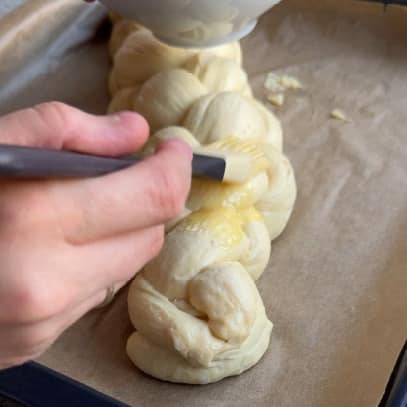
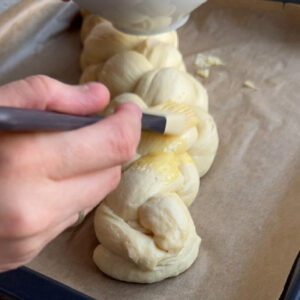
In a bowl, whisk 1 egg well with about 2 tablespoons of milk. Brush the Striezel with the beaten egg and, if desired, sprinkle with coarse sugar or slivered almonds.
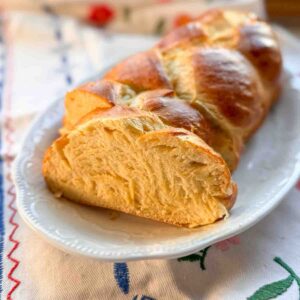
Bake for about 20–30 minutes until golden brown.
If available, turn on the steam function. Alternatively, fill an ovenproof dish with water and place it on the oven rack during baking.
By the way, the Striezel recipe - including braiding instructions - is also available in my cookbook, “Granny's Austrian Pastry Recipe Notebook”! (You can take a look inside the book and find where to buy it worldwide here.)
If you liked the Braided Easter Bread Recipe, maybe you'll also like:




If you tried out the recipe, I would very much appreciate it, if you leave a comment and rating!
Striezel recipe to print out

Austrian Sweet Yeast Bread
Zutaten
For the dough
- 21 g fresh yeast ¾ oz or 7 g/¼ oz/2¼ teaspoon instant dry yeast
- 250 ml milk 1 cup
- 70 g sugar ⅓ cup
- 500 g bread flour 4 cups or all-purpose flour
- 1 pkg vanilla sugar 2 tsp/8 g or ⅓ teaspoon vanilla extract + 2 teaspoon sugar
- pinch of salt
- 1 egg medium or large
- 70 g butter 5 tbsp, at room temperature, unsalted
- handful raisins optional
- 1 tablespoon dark rum optional
- 1 organic lemon finely grated zest, optional
Additionally
- flour for dusting and shaping
- 1 small egg + 2 tablespoon of milk for brushing
- extra coarse sugar or sliced almonds for sprinkling optional
Anleitung
Preparations in advance:
- It's best to take the 70 g butter out of the refrigerator 1–2 hours before you start preparing it and cut it into small pieces. I forget to do that every time, and then I get annoyed...

- Weigh out 500 g bread flour and 70 g sugar, and set them aside in separate bowls.
- Optional: Finely grate the zest from 1 organic lemon.
- Optional: Let the handful raisins soak in dark rum for about 30 minutes; in that case, omit the 1 tbsp dark rum and squeeze out the excess liquid well before using.

Making the Striezel:
- Gently warm the 250 ml milk. It should be lukewarm.
- If you're using fresh yeast: Crumble 21 g fresh yeast and dissolve it in the milk along with 1 tablespoon of the 70 g sugar in a large bowl.If you're using dry yeast, you can also dissolve it in the milk right away, or mix it directly into the flour.
- Mix in gradually the 500 g bread flour, the remainder of the 70 g sugar, 1 pkg vanilla sugar, a pinch of salt1 egg.
- Finally, mix in the 70 g butter a little at a time.
- Optionally, knead in a handful raisins, 1 tbsp dark rum, and the grated zest of 1 organic lemon.
- Tips: You can knead the yeast dough using a stand mixer, the dough hook attachment on your hand mixer, or by hand. It’s important to knead the dough thoroughly for about 5–10 minutes, until it pulls away from the bowl and has a smooth surface.
- Shape the dough into a ball with a smooth surface.
- Cover the bowl with a damp kitchen towel, a plate, plastic wrap, or something similar.
- Let it rest in a warm, draft-free place for about 30 to 60 minutes, until the dough has doubled in volume. Ideally, let the yeast dough rise next to a heater or in the oven at about 30°C.
- You can also knead the yeast dough the evening before baking and then let it rest overnight in the refrigerator. The next day, let it rise for another 30–60 minutes at room temperature before using it.
- Knead the dough thoroughly a second time with your hands. If the dough is very sticky, dust your hands and the work surface very lightly with flour - but use as little as possible so the dough doesn't get too dry!
- Use a dough scraper to cut it into 3–6 equal-sized pieces. (Depending on how many strands you want to use to braid the Striezel.)
- Shape each of the dough pieces into a ball and smooth the surface until round. This helps create a smoother surface and ensures a more even result.
- Cover the rounded dough pieces and let them rest for about 10 more minutes. This allows the dough to “relax,” making it easier to roll out the dough strands.
- Roll out the balls into strands about 30–40 cm long. A good way to do this is to flatten the ball, gently tuck in the top and bottom edges, and then apply even pressure with your hands as you roll out the strand.
- Now braid it into a plait.
- Line a baking sheet with parchment paper / baking mat or grease it with butter. Carefully transfer the Striezel to the baking sheet.
- Let it rest, covered, for another 30 minutes.
- In the meantime, preheat the oven to 180°C (160°C fan/350°F/Gas Mark 4).
- In a bowl, whisk 1 small egg + 2 tablespoon of milk well with about 2 tablespoons of milk. Brush the Striezel with the beaten egg and, if desired, sprinkle with coarse sugar or slivered almonds.
- Bake for about 20–30 minutes until golden brown.
- If available, turn on the steam function of your oven. Alternatively, you can, optionally, fill an ovenproof dish with water and place it on the oven rack during baking.

(c) by Angelika Kreitner-Beretits / Vienna Sunday Kitchen
Oktober 28, 2026 Hast du das Rezept ausprobiert? Dann freue ich mich über deine Bewertung!! / Rate this Recipe!
Ich freu mich über deine Rückmeldung zum Rezept in den Kommentaren!